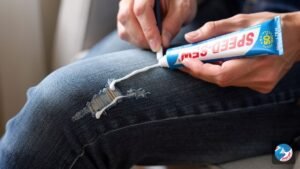
You’re getting ready for a yoga class or just settling in for a comfortable day at home, and you pull on your favourite pair of black leggings. Then you feel it—a slight snag, followed by the dreaded sight of a small hole or a seam that’s started to give way. Your first thought might be that they’re ruined. Your second might be to reach for that tube of fabric glue in your craft drawer. But can a simple adhesive really handle the constant pulling and stretching of spandex?
It’s a great question, and the answer isn’t a simple yes or no. Using the wrong glue on a stretch fabric is a recipe for a stiff, crunchy patch that will likely crack and fall apart the first time you move. But with the right product and technique, a no-sew repair is definitely possible.
The biggest mistake is using too much glue. Apply a very thin, even layer to a patch on the *inside* of the garment. A thick blob will dry into a hard, uncomfortable lump that cracks as soon as the fabric stretches.
Why Stretch Fabric is a Challenge for Adhesives
Before we dive into the fix, it’s helpful to understand why leggings and other stretch garments are so tricky. Fabrics like spandex, Lycra, and elastane are made of synthetic polymer fibres that can stretch significantly and then return to their original shape. They are designed for movement.
Most standard fabric glues, especially those intended for cotton, denim, or felt, are formulated to create a strong, permanent, and often rigid bond. When you apply this type of glue to a non-stretch fabric, it works perfectly. It soaks into the fibres and hardens, holding them together like a tiny weld. But when you apply that same rigid glue to a fabric that needs to stretch up to 50% or more, the bond has no choice but to break. The glue doesn’t stretch; it just cracks, leaving you with a flaky mess and the original hole.
The key is finding an adhesive that is engineered to move *with* the fabric, not against it.
What You Can Try Yourself: A Guide to Gluing Stretch Fabric
For small holes, minor seam separations, or applying a decorative patch, a DIY glue repair can be a lifesaver. The success of your repair hinges on two things: the right glue and the right application method.
1. Choose a Flexible Fabric Adhesive
This is the most critical step. Head to the craft or hardware store and look for a fabric adhesive that specifically states it is “flexible,” “stretchable,” or suitable for synthetic fabrics and knits. These formulas are designed to cure into a pliable, rubber-like bond that can bend and stretch along with the garment. Avoid all-purpose craft glues or super glues, as they will dry hard and brittle.
2. The All-Important Patch Test
Never apply a new glue directly to a visible part of your garment. Every fabric and glue combination can behave differently. Find an inconspicuous spot to test it first, like the inside hem allowance, the inner side of the waistband, or on a scrap piece of similar material if you have one.
- Apply a tiny dot of the glue.
- Let it dry completely. Check the packaging—this can take anywhere from a few hours to a full 24 hours.
- Once fully cured, stretch the fabric around the test spot. Does the glue stretch with it? Or does it crack, turn white, or peel away?
If it holds up to stretching without any issue, you’re ready to proceed with the actual repair.
3. The Repair Process: Step-by-Step
Let’s say you have a small hole (smaller than a dime) in the leg of your leggings.
- Prep the Area: Turn the leggings inside out. Make sure the area around the hole is clean and dry. Trim away any loose, frayed threads with a pair of sharp scissors.
- Cut a Patch: You’ll need a patch to reinforce the hole from behind. The best material is a small scrap from an old pair of leggings or another piece of stretchy knit fabric. Cut a patch that is slightly larger than the hole itself, with rounded corners to prevent peeling.
- Apply the Glue: Place a piece of cardboard or plastic wrap inside the leg of the leggings, directly under the hole. This is essential to prevent gluing the front and back of the leggings together. Apply a thin, even layer of your flexible fabric adhesive to one side of the patch. Don’t apply it directly to the leggings. Using too much glue is a common mistake that creates a stiff, uncomfortable lump.
- Position and Press: Carefully place the glue-side-down patch over the hole on the inside of the leggings. Press it down firmly with your fingers. Smooth out any wrinkles or bubbles.
- Let It Cure: This requires patience. Leave the leggings flat with the cardboard still inside and let the glue cure for the full time recommended on the packaging. Do not try to wear or wash them prematurely. Rushing this step is the primary reason for repair failure.
When DIY Is Not Enough
Fabric glue is a fantastic tool for minor repairs, but it has its limits. You should probably skip the DIY route if you’re dealing with:
- Large Tears: A big, gaping hole, especially in a high-stress area like the crotch or knee, requires the structural integrity that only proper stitching can provide. A glued patch is unlikely to hold under that much tension.
- Sheer or Delicate Fabrics: On thinner or mesh-panelled leggings, the glue is likely to bleed through and be very noticeable, potentially ruining the look of the garment.
- High-Stress Seams: While you might be able to tack down a small part of a seam that’s come undone, a major seam failure (like the main inseam) needs to be professionally re-sewn to withstand wear and washing.
When to Call a Professional
Are the leggings from a high-end brand you invested in? Are they your absolute favourite pair that you can’t bear to lose? Is the damage in a very obvious or high-tension spot? In these cases, seeking a professional repair is your best bet.
A skilled seamstress or repair expert can often mend stretch fabrics in a way that’s nearly invisible. They can use specialized stretch stitches and techniques to restore the garment’s function and appearance without compromising the fabric’s elasticity. It’s a small investment to save a piece of clothing you truly love.
Prevention Is the Best Fix
To keep your leggings and other stretch garments in top shape for longer, a little care goes a long way.
- Wash Gently: Use a cold, gentle cycle and consider placing leggings in a mesh laundry bag to prevent snagging on zippers or buttons from other clothes.
- Avoid High Heat: The high heat of a dryer is the enemy of elastane. It causes the fibres to become brittle and lose their stretch over time. Always hang your leggings to air dry.
- Be Mindful: Be careful with sharp jewellery, rough surfaces, and velcro, which can easily snag and tear delicate knit fabrics.
A small rip doesn’t have to be the end for your favourite stretch pants. With the right flexible glue and a careful technique, you can handle many minor repairs yourself. But for those bigger jobs or cherished items, don’t hesitate to get an expert opinion. If the repair feels daunting or you want a perfect finish, the team at Speed-Sew is here to help. Contact us for professional advice and repairs that will get you back into your favourite leggings in no time.
Will fabric glue make my leggings stiff?
How long does flexible fabric glue take to dry on spandex?
Can I wash leggings after using fabric glue?
Is it better to sew or glue ripped leggings?
Last updated: 27 June 2026