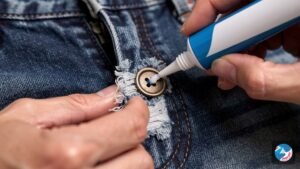
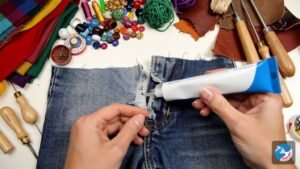
You found the perfect pair of trousers, but they’re about three inches too long. You have an event tomorrow night, and no time to visit a tailor. In the craft drawer, you have two choices: a tube of fabric glue and a roll of iron-on hem tape. Both promise a quick, no-sew fix, but which one will still be holding up after the first, fifth, or twentieth wash? It’s a common dilemma, and the answer isn’t just about which is faster—it’s about which one truly lasts.
The Great Debate: How They Actually Work
Before we can talk about longevity, it helps to understand the fundamental difference between these two products. They aren’t just two versions of the same thing.
Before committing to a full hem, always test your glue or tape on a hidden scrap of the same material. This lets you see how it affects the fabric’s drape and colour, and confirms whether the bond will be strong enough for your needs. A five-minute test can save you from a stiff, visible, or failed repair later on.
Iron-On Hem Tape is a web of thermoplastic adhesive. When you heat it with an iron, the webbing melts and fuses the two layers of fabric together as it cools. The bond is physical, relying on the melted adhesive gripping the fibres of your clothing. It’s fast and creates a very crisp, straight edge.
Fabric Glue, like Speed-Sew, is a liquid polymer adhesive. It works by soaking into the fabric fibres and creating a chemical bond as it cures (dries). Instead of just sitting between the layers, it becomes one with them. This process takes longer—it needs time to cure—but results in a different kind of hold.
The Showdown: A Head-to-Head Comparison
We’ve all used both, and we’ve seen both succeed and fail. Here’s a frank look at how they stack up in the areas that matter most for a lasting repair.
Round 1: Wash Durability
This is the big question. A hem that falls down in the wash is a failed hem.
- Hem Tape: Its biggest weakness is repeated washing and drying. The constant agitation and heat cycles can slowly break down the adhesive. The edges are often the first to go, starting to peel away. If the iron wasn’t hot enough during application, or if you use a high-heat dryer setting, the bond can fail even faster. It’s a great solution for a few wears, but it’s often not a permanent one.
- Fabric Glue: When applied correctly and allowed to fully cure (this is critical!), a quality fabric glue creates a permanent, machine-washable bond. Because the glue integrates with the fibres, it’s less likely to peel. It flexes with the fabric in the wash instead of fighting against it. Speed-Sew, for example, has been trusted for over 50 years precisely because its formula was designed to withstand the rigours of a washing machine.
Winner: Fabric Glue (for long-term, multi-wash durability).
Round 2: Flexibility and Feel
How a repair feels is just as important as how it looks. You don’t want your trouser cuffs to feel like cardboard.

- Hem Tape: This is where tape often falls short. It creates a noticeably stiff line along the hem. For structured wool trousers or heavy cotton chinos, this can be fine—it even helps hold a sharp crease. But for anything soft, flowing, or stretchy (like jersey dresses, leggings, or t-shirt sleeves), the stiff line of tape ruins the drape of the fabric.
- Fabric Glue: A good fabric glue is formulated to dry flexible. It moves with the fabric, so you often can’t even feel where the repair was made. This makes it the superior choice for knits, stretch fabrics, and lightweight materials where preserving the natural movement and feel is essential.
Winner: Fabric Glue (for preserving the natural feel and drape of the fabric).
Round 3: Application and Appearance
Both methods aim for an invisible finish, but they get there differently.
- Hem Tape: Application is quick—just cut, place, and iron. It provides a perfectly straight, uniform hemline, which is a huge plus for beginners. However, on very thin or light-coloured fabrics, you can sometimes see the faint outline of the tape webbing through the material.
- Fabric Glue: Application requires a bit more care. You need a thin, even bead to avoid soaking through the fabric or creating a lumpy finish. It takes practice to get it perfect. But when done right, the bond is truly invisible because there’s no extra material—just the bonded fabric itself.
Winner: Tie. Tape is easier for a perfect line, but glue offers a more truly invisible finish on a wider range of fabrics if applied with care.
Which Method for Which Fabric?
The best choice depends entirely on your project. Use this table as a quick guide.
| Fabric/Material | Best Method | Key Warning |
|—|—|—|
| Denim/Cotton | Glue or Sewing | Ensure glue cures fully before washing for maximum strength. |
| Stretch Fabric (Jersey, Spandex) | Flexible Glue | Hem tape will feel stiff and may restrict the fabric’s natural stretch. |
| Leather/Vinyl | Specific Adhesive | The heat from an iron required for hem tape can melt, warp, or permanently damage the surface. |
| Delicate Synthetics (Rayon, Silk) | Test First | Always test glue on a scrap. The high heat needed for hem tape can easily melt or leave a shiny mark on these fabrics. |
| High-Stress Seams | Sewing Only | No-sew methods are not strong enough for crotches, armpits, or belt loops. |
Making Your No-Sew Hem Last
Whichever method you choose, following the rules is key to longevity. For a lasting fabric glue bond, always follow these steps:
- Apply a thin, even layer. Too much glue is the most common mistake. It won’t dry properly and can make the fabric stiff.
- Press firmly for 30-60 seconds to ensure the glue makes good contact with both surfaces.
- Remove any excess glue with a damp cloth before it starts to dry.
- Let it cure. This is . Wait at least 24 hours (and up to 72 for heavy fabrics) before washing.
- Wash with care. Turn the garment inside-out and use a gentle cycle with cool water.
- Avoid high dryer heat. Tumble dry on low or, even better, hang to dry.
- Always test first! If you’re unsure, apply a small amount to a hidden seam allowance or a scrap piece of the same fabric to see how it dries.
When to Skip the DIY and See a Tailor
No-sew solutions are fantastic, but they have their limits. For certain situations, sewing is the only reliable answer. Don’t use glue or tape for:
- High-stress seams: Crotch seams, backpack straps, pocket openings, or any area that bears a load.
- Expensive or delicate garments: If it’s a silk blouse or a tailored suit jacket, the risk of making a mistake is too high. A professional tailor has the tools and skills for a truly invisible, reversible alteration.
- Large holes or missing fabric: These require a patch or darning, which glue cannot replicate.
- Heavy-duty outerwear: The seams on winter coats or workwear need the structural strength of thread.
A final note on safety: Always check the product label for safety guidance, especially when using products on children’s clothing or when kids are helping with a craft. In Canada, consumer products are regulated under the Canada Consumer Product Safety Act (CCPSA), but it’s always wise to read the manufacturer’s instructions.
Note: This article is a general overview. Technical details and requirements vary by project, location, and applicable regulations. For specific guidance tailored to your situation, contact us — we’re here to help.
Need a Flexible, Washable, and Lasting Fix?
For hems that need to move with you and survive the laundry basket, a flexible fabric glue is almost always the more durable choice. Speed-Sew is available across Canada at retailers like Walmart Canada, Amazon.ca, Michaels, and Fabricland. If you have questions about your specific repair project, don’t hesitate to reach out. We’re always happy to help you find the right solution.
Is fabric glue or hem tape better for jeans?
For denim jeans, a flexible fabric glue is generally the better long-term choice. Jeans go through a lot of stress and washing. Fabric glue creates a flexible bond that moves with the thick cotton twill and holds up better to repeated machine washing than the stiffer bond of hem tape, which can peel over time.
Can you wash clothes repaired with hem tape?
Yes, you can wash clothes hemmed with iron-on tape, but its durability can be limited. For best results, wash on a gentle cycle with cool water and tumble dry on low or hang dry. High heat from the washer or dryer can weaken the adhesive, causing it to peel away after several washes.
Does fabric glue wash out?
No, a permanent fabric glue like Speed-Sew is designed to be waterproof and machine washable once it has fully cured. The key is allowing it to cure completely before its first wash (typically 24-72 hours). Once cured, it forms a chemical bond with the fabric fibres that will not wash out.
Which is more flexible, fabric glue or hem tape?
Fabric glue is significantly more flexible. It’s designed to dry soft and move with the fabric, making it ideal for knits, jerseys, and stretch materials. Iron-on hem tape creates a much stiffer, more rigid line, which can alter the drape and feel of softer clothing.
Last updated: 28 July 2026