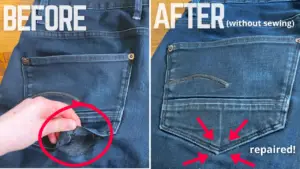
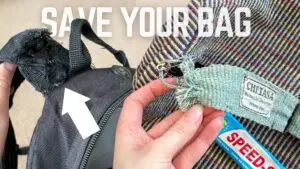
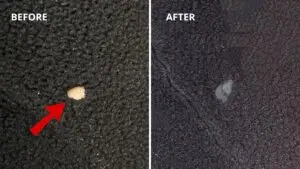
You’ve found the perfect patch for your jacket, or the hem on your best trousers has come undone. You reach for fabric glue, but a nagging question stops you: will this repair actually survive the wash? Yes—if you’re using a permanent fabric adhesive specifically rated as washable and you allow it to cure fully. However, success depends on using the right product and, more importantly, the right technique. The difference between a repair that lasts for years and one that fails after a single wash often comes down to one simple, overlooked step: patience. Understanding how fabric adhesives need time to fully cure is the key to mastering any no-sew fix.
- A washable fabric glue bond is achievable, but requires a full curing time of 24-72 hours; washing too early is the main reason repairs fail.
- Permanent fabric glues like Speed-Sew create a flexible bond that moves with the garment, preventing cracking and peeling.
- Always opt for sewing on high-stress areas like crotch seams, backpack straps, and belt loops, as glue lacks the required tensile strength.
- Consumer adhesives sold in Canada are subject to applicable Canadian consumer-product safety requirements, but “non-toxic” labels are manufacturer declarations, so always read safety instructions.
- For a durable repair, apply a thin layer of glue, press firmly, and wipe away excess before it dries.
The Science of a Washable Bond: What Makes Fabric Glue Work?
Unlike simple craft glue that dissolves in water, permanent fabric adhesives like Speed-Sew are engineered to last. They are typically water-based polymer emulsions. When you apply the glue, the water evaporates, allowing the adhesive to dry and cure into a flexible bond between the fabric fibres. Full curing allows that bond to reach the strength and water resistance needed for laundering. The result is a water-resistant bond that won’t crack or peel because it’s designed to move and stretch with the garment. This flexibility is crucial for comfort and ensures your repair feels natural, not stiff.
Curing Time is King: The Most Common No-Sew Mistake
The most common reason no-sew repairs fail is impatience. It’s crucial to respect the glue’s curing time. Many people test the bond after an hour when it feels dry to the touch (tack-free) and assume the job is done. This is a mistake. There’s a huge difference between being ‘dry’ and being ‘fully cured’.
- Tack-Free Time: This is when the surface of the glue is no longer sticky. This can take as little as 30-60 minutes, depending on the thickness of the application and humidity. At this stage, the chemical bonding process has only just begun.
- Curing Time: This is the time required for the adhesive to reach its maximum bond strength and water resistance. For most permanent fabric glues, this takes 24 to 72 hours. During this period, the polymer chains are still cross-linking and forming the durable, flexible film that will stand up to washing and wearing.
Washing a garment before the glue is fully cured is like trying to drive on freshly poured concrete. The water and mechanical action of the washing machine will disrupt the uncured polymers, washing away parts of the adhesive and breaking the bond. To ensure your no-sew repair is truly permanent, follow this checklist every time.
Care Instructions for a Permanent, Washable Repair
- Test First: If you’re unsure about the fabric, always test the glue on a small, hidden scrap or seam allowance first.
- Apply a Thin, Even Layer: More is not better. A thick, goopy layer takes much longer to cure and can remain gummy in the center. Apply a thin, even line of glue.
- Press Firmly: After applying the glue and positioning your fabric (e.g., folding a hem, placing a patch), press the pieces together firmly for 30-60 seconds. This ensures good contact between the adhesive and the fabric fibres.
- Remove Excess Immediately: Wipe away any glue that squeezes out with a damp cloth before it starts to dry. Once it dries, it’s much harder to remove.
- WAIT: This is the most important step. Let the item sit undisturbed for at least 24 hours, and ideally up to 72 hours, before washing or wearing.
- Wash with Care: For the first wash, turn the garment inside-out and use a gentle cycle with cold water.
- Avoid High Heat: While the bond is waterproof, high heat from a dryer can sometimes soften the adhesive. It’s best to air dry the item or use a low heat setting, always checking the garment’s care label first.
Fabric Glue in the Canadian Market: Speed-Sew vs. The Competition
When you’re looking for fabric glue in Canada, you’ll find several reliable options at retailers like Walmart, Amazon.ca, and Michaels. Here’s a quick comparison of typical prices for popular brands:
- Speed-Sew: Known for its flexible and durable bond, a single unit typically retails for approximately $6 – $22 CAD. Multi-packs are also available.
- Dritz Liquid Stitch: A popular choice for quick hems and repairs, it generally costs between $7 – $9 CAD per unit.
- Aleene’s Fabric Fusion: This permanent fabric adhesive is usually priced between $9 – $12 CAD per unit.
- E6000 Fabri-Fuse: A strong, washable adhesive that also retails for about $9 – $12 CAD per unit.
While all these products create a permanent bond, Speed-Sew’s long-standing focus on clothing repair makes it a reliable choice for everything from denim to delicate hems.
When to Put the Glue Down: Situations Where Sewing Is Better
Fabric glue is a fantastic tool, but it isn’t the right solution for every problem. For certain repairs, a needle and thread provide superior strength and longevity. Knowing when *not* to use glue is just as important as knowing how to use it correctly. As a rule, opt for sewing on any high-tension areas like seams, and use glue for surface applications like patches and hems.
Do NOT Use Fabric Glue For:
- High-Stress Seams: Never use fabric glue to repair the crotch seam of trousers, the shoulder seam of a heavy coat, or the straps on a backpack. These seams are under constant tension and require the structural strength of thread.
- Large Holes: Glue is for bonding two layers of fabric together. It cannot create new fabric. If there is a large hole where material is missing, you need to sew in a patch or darn the hole.
- Expensive or Delicate Garments: On fine silk, cashmere, or a tailored suit, a mistake with glue can be permanent and visible. Professional tailoring or invisible stitching is the safer bet.
- Belt Loops or Pocket Openings: These areas are pulled and stressed constantly. A sewn repair is far more durable and reliable for these functional parts of a garment.
- Heavy Stretch Fabrics: While flexible glues work on some stretch materials, the extreme stretch of items like athletic leggings or cycling shorts is often best repaired with a stretch stitch on a sewing machine.
Fabric-Specific Repair Guide
| Fabric/Material | Best Method | Key Warning |
|---|---|---|
| Denim/Cotton | Glue or Sewing | Must cure fully (24-72 hours) before washing to ensure a permanent bond. |
| Stretch Fabric | Flexible Glue | The glued area may feel slightly stiffer than the surrounding fabric. Test on an inconspicuous area. |
| Leather/Vinyl | Specific Leather Adhesive | Standard fabric glues may not bond properly. Iron-on tapes can melt or damage the surface. |
| Delicate Synthetics (e.g., chiffon) | Test First / Hand Sewing | Glue can sometimes bleed through very thin fabrics. Test on a scrap piece is essential. |
| High-Stress Seams | Sewing Only | Glue does not have the linear tensile strength to hold load-bearing seams together reliably. |
Safety and Standards in Canada: What to Know Before You Glue
Consumer adhesives sold in Canada are subject to applicable Canadian consumer-product and chemical safety requirements. Manufacturers and sellers are responsible for compliance; Health Canada oversees and enforces those requirements rather than individually approving every fabric glue before sale. While you may see labels like ‘non-toxic,’ this is a manufacturer’s declaration. For your safety, always work in a well-ventilated area, read the instructions on the label, and keep the product away from small children. For clothing repairs, it’s especially important to let the adhesive cure completely before wearing the garment to ensure the bond is stable and inert.
So, does fabric glue last in the wash? Absolutely. With a quality product, the right technique, and the patience to let it fully cure, your no-sew repairs will be strong, flexible, and ready for the laundry basket. It’s an empowering and cost-effective skill for any household.
Is Speed-Sew fabric glue safe for children’s clothes in Canada?
Yes, when used as directed. Consumer products in Canada are regulated under the Canada Consumer Product Safety Act (CCPSA). Speed-Sew is formulated to be safe for household use. For best results on children’s clothing, ensure the glue is applied thinly and allowed to cure completely for 24-72 hours before the garment is worn or washed, creating an inert and stable bond.
How much does a reliable fabric glue cost in Canada and how long does it take to work?
In Canada, a single unit of reliable fabric glue like Speed-Sew typically costs between CAD 6 and CAD 22 CAD, depending on the size. While the glue may feel dry in about an hour, it is not ready for washing. For a permanent, washable bond, you must allow the glue to fully cure for 24 to 72 hours before subjecting it to wear or laundry.
What is the most important step to make a no-sew repair last through the wash?
The single most critical step is allowing the adhesive to fully cure. Many users mistakenly wash the garment when the glue is only tack-free (dry to the touch). You must wait the full recommended 24-72 hours for the glue to form a water-resistant, permanent bond that can withstand the washing machine. Rushing this step is the primary cause of repair failure.
My hem just fell down. Can I use fabric glue for a quick fix in Canada?
Yes, fabric glue is excellent for a quick hem repair. You can apply it, press the hem in place, and it will be secure enough to wear within about an hour. However, remember this is not a permanent fix until it has fully cured. Avoid washing the garment for at least 24-72 hours to ensure the repair becomes permanent and washable.
- Canada Consumer Product Safety Act (CCPSA) — Official Government of Canada legislation governing the safety of consumer products.
- Health Canada: Consumer Product Safety — Information for consumers on product safety, recalls, and reporting incidents in Canada.
Last updated: 27 August 2026