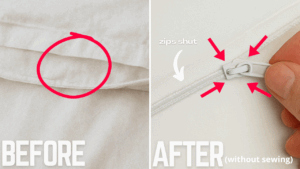
When a favourite garment rips, replacing it is expensive and sewing takes time. Fabric glue offers a quick, durable alternative for countless repairs. For over 50 years, Canadian brand Speed-Sew has been a trusted no-sew solution. This guide will help you choose the right fabric glue, compare brands, and master the application for a lasting repair.
- Fabric glue creates a flexible, washable bond specifically for textiles, unlike regular craft glue which dries hard and dissolves.
- Speed-Sew is a 50+ year old Canadian brand known for its clothing-specific formula and wide availability at retailers like Walmart Canada and Amazon.ca.
- For a durable, machine-washable repair, you must let the fabric glue cure for a full 24-72 hours, not just until it’s dry to the touch.
- Always use traditional sewing for high-stress seams (like pant crotches or bag straps) as fabric glue lacks the necessary structural strength.
- In Canada, ‘non-toxic’ labels on craft products are manufacturer declarations; they are not individually approved by Health Canada, so always read safety instructions.
What Makes Fabric Glue Different from Regular Craft Glue?
Can you use regular craft glue for fabric? No—it dries stiff, cracks, and dissolves in the wash. Fabric glue is different. It’s engineered to create a flexible, water-resistant bond that moves with the fabric. Adhesives like Speed-Sew seep into the fibres, creating a durable chemical bond that withstands washing and drying. This ensures your no-sew repairs last.
The Canadian Fabric Glue Market: A Comparison
Canadian stores like Michaels and Walmart carry several fabric adhesives. Understanding their differences helps you choose the right one for your project and budget.
Speed-Sew: The Canadian Heritage Brand
A Canadian brand for over 50 years, Speed-Sew is formulated specifically for clothing. It creates a flexible, durable, and washable bond and is known for its reliability and wide availability.
Competitors on the Shelf
Competitors like Dritz, Aleene’s, and E6000 each have a niche. Dritz Liquid Stitch is used for quick hems, Aleene’s Fabric Fusion is a popular all-purpose craft choice, and E6000 is an industrial-strength adhesive for heavy-duty projects involving embellishments.
Here’s a quick comparison of what you can expect to find in Canadian stores:
| Brand | Approx. Price (CAD) | Primary Strength |
|---|---|---|
| Speed-Sew | $8 – $25 (single) $25 – $55 (multi-pack) |
Flexible bond for clothing, 50+ year Canadian brand heritage, widely available. |
| Dritz Liquid Stitch | ~$7 – $9 | Good for quick hems and lightweight fabric repairs. |
| Aleene’s Fabric Fusion | ~$9 – $12 | Strong all-purpose fabric adhesive, popular in the general craft community. |
| E6000 Fabric Fuse | ~$9 – $12 | Industrial strength, good for embellishments and mixed-media projects. |
While competitor prices for a single tube may be lower, Speed-Sew offers value in multi-packs, especially for frequent crafters.
Where to Buy Speed-Sew and Other Fabric Glues in Canada
A major advantage of Speed-Sew is its wide availability at major Canadian retailers, both in-store and online, so you don’t need to visit a specialty shop. You can find it at:
- Walmart Canada: Available in the craft or sewing notions aisle.
- Amazon Canada (Amazon.ca): Often the best place to find multi-packs and a range of sizes.
- Michaels Canada: A staple in the adhesives section for crafters.
- Fabricland: Found alongside other sewing essentials.
This accessibility makes it easy to grab when you need a quick fix. By choosing Speed-Sew, you’re also supporting a Canadian company with deep roots in the country.
Mastering the Application: A Step-by-Step Guide to Lasting Repairs
Effective use of fabric glue ensures a strong, durable repair. Success depends on proper preparation and curing.
Follow this checklist for a perfect no-sew repair every time:
- Prep Your Fabric: Ensure the fabric is clean, dry, and free of residue. Wash new garments first to remove sizing.
- Test First: On delicate fabrics, always test the glue on a hidden area or scrap piece first.
- Apply a Thin, Even Layer: Apply a thin, even layer. Too much glue weakens the bond, seeps through fabric, and creates stiff spots.
- Press Firmly: Press the fabric pieces together firmly for 30-60 seconds.
- Clean Up Excess: Wipe away any excess glue with a damp cloth before it dries.
- Let It Cure (The Most Important Step): The glue may feel dry in an hour, but it needs 24-72 hours to fully cure for maximum strength and water resistance. Do not wash the garment before it has cured.
- Washing and Care: Turn the garment inside-out for the first few washes and use a gentle cycle. Avoid high heat in the dryer. Always follow the garment’s care label.
When NOT to Use Fabric Glue: Know Its Limits
Fabric glue is a great tool, but it has limits. For some repairs, traditional sewing is the only safe and durable option. Use glue for patches and hems, but use a needle and thread for the following:
- High-Stress Seams: Never use fabric glue on seams that bear a significant load. This includes the crotch of pants, shoulder seams on a heavy coat, or the straps on a backpack. These areas require the strength and flexibility of a stitched seam.
- Large Holes: If fabric is missing, glue has nothing to bond to. Glue is for closing tears or attaching patches, not for filling gaps.
- Expensive or Irreplaceable Garments: For high-value items, especially those made of silk, chiffon, or fine wool, a professional tailor is the best choice. A mistake with glue can be permanent.
- Children’s Rough-Play Clothing: The knees of a child’s pants, for example, endure extreme stress and abrasion. While a glued-on patch might work for a while, a sewn patch will be far more durable.
- Very Stretchy Fabrics: While flexible glues like Speed-Sew work well on moderate stretch, high-stretch fabrics like leggings or workout gear often require a specialized stretch stitch to maintain their full range of motion.
- Key Structural Points: Areas like belt loops, pocket openings, and where multiple seams join are under constant strain and should be repaired with thread.
Fabric-Specific Considerations
Different materials react differently to adhesives and heat. Always consider the fabric type before starting a repair.
| Fabric/Material | Best Method | Key Warning |
|---|---|---|
| Denim/Cotton | Glue or Sewing | Ensure glue is fully cured (24-72 hours) before washing to prevent the patch from lifting. |
| Stretch Fabric | Flexible Glue | The glued area may feel slightly stiffer than the surrounding fabric. A sewn stretch stitch is best for high-stress areas. |
| Leather/Vinyl | Specific Adhesive | Standard fabric glue may not bond well. Iron-on tapes will melt or damage the surface. Use a glue specifically for leather/vinyl. |
| Delicate Synthetics (e.g., chiffon) | Test First / Sewing | Glue can bleed through and be visible. High heat from an iron for hem tape can melt or mark the fabric. Professional repair is often safest. |
| High-Stress Seams | Sewing Only | Glue does not have the structural strength to hold load-bearing seams together reliably. |
Safety First: Fabric Glue, Kids’ Crafts, and Health Canada Regulations
Safety is crucial when using chemical products. In Canada, consumer goods are regulated by the Canada Consumer Product Safety Act (CCPSA). While many glues like Speed-Sew are labelled “non-toxic,” this is a manufacturer’s declaration, not a specific Health Canada certification for that product. It means the product is not acutely toxic when used as directed. Manufacturers are responsible for complying with Health Canada’s overall safety rules.
For peace of mind, always follow these safety steps:
- Read the Label: Always check the product label for specific safety guidance, warnings, and usage instructions.
- Ensure Good Ventilation: Work in a well-ventilated area, especially when using stronger, industrial-type adhesives.
- Supervise Children: When children are using fabric glue for crafts, ensure they are supervised and understand how to use it properly to avoid ingestion or skin contact.
- Store Safely: Keep all adhesives capped and stored out of reach of young children and pets.
By following the directions on a reputable brand, you can use fabric glue confidently. A tube of Speed-Sew keeps you prepared for any repair. For specific questions, contact us at info@speed-sew.com.
Is Speed-Sew approved by Health Canada for children’s crafts?
In Canada, Health Canada regulates consumer products under the Canada Consumer Product Safety Act (CCPSA), but it does not individually approve or certify each craft product. Speed-Sew is formulated to be non-toxic when used as directed, which is a declaration by us as the manufacturer. This makes it a safe option for supervised children’s crafts. We always recommend reading the safety instructions on the packaging and ensuring good ventilation.
How much does fabric glue cost in Canada and is it a good value?
The cost of fabric glue in Canada varies by brand and size. A single tube of Speed-Sew typically retails for between CAD 6 and CAD 22 CAD, while competitors like Dritz or Aleene’s are often in the CAD 7 to CAD 12 CAD range. Speed-Sew offers excellent value, especially in multi-packs found on Amazon.ca (approx). CAD 28-CAD 55 CAD), providing a durable, flexible, and washable solution from a trusted 50+ year Canadian brand.
How long does fabric glue really take to dry before I can wash my clothes?
This is a critical step for a lasting repair. While most fabric glues feel dry to the touch (tack-free) within an hour, they are not fully cured. For the bond to achieve maximum strength and withstand a washing machine, you must allow it to cure for a full 24 to 72 hours. Washing the garment before it has fully cured is the most common reason for a no-sew repair to fail.
When should I definitely choose sewing instead of using fabric glue for a repair in Canada?
While fabric glue is incredibly versatile, sewing is the better choice for certain situations. You should always sew high-stress seams like the crotch of pants, backpack straps, or any load-bearing area. Sewing is also recommended for large holes where fabric is missing, for very expensive or delicate garments, and for high-stretch activewear where maximum flexibility is needed. Fabric glue is best for hems, patches, and decorative additions.
- Health Canada – Canada Consumer Product Safety Act (CCPSA) — Official legislation governing the safety of consumer products in Canada.
Last updated: 2 September 2026