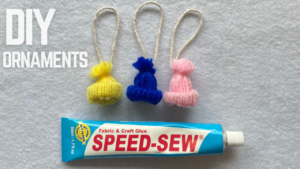
Health Canada does not approve, certify or test individual fabric glue brands, including Speed-Sew. Under Canadian law, the company that makes, imports, advertises or sells a consumer chemical product is responsible for meeting the federal rules, and Health Canada enforces those rules. A “non-toxic” claim on a bottle is therefore the manufacturer’s own statement, not a government stamp of approval. The sources available for this article do not document Speed-Sew’s manufacturing processes, ingredient sourcing or test results, so none are described here. Instead, this guide explains what the rules cover, what common label wording does and doesn’t mean, which questions to put to any manufacturer, and how to use fabric glue sensibly at home, especially when children are nearby or the repair will sit against skin.
What Health Canada’s role is for products like fabric glue
Consumer product safety at the federal level is handled by Health Canada’s Consumer Product Safety Program, which is responsible for administering and enforcing the Canada Consumer Product Safety Act (CCPSA). In practice this is an enforcement system, not a pre-approval system. Health Canada sets requirements, and it can act when a product falls short. It does not review each fabric glue before it reaches Walmart Canada, Amazon.ca, Michaels or Fabricland and then issue an endorsement.
For a shopper, the consequence is simple. Wording like “meets Health Canada standards” or “Health Canada compliant” on packaging or a website describes the seller’s own view of its product. It is not a certificate number you can look up, and it does not mean a government lab has evaluated that specific bottle. This applies to every brand in the craft aisle, Speed-Sew included.
None of this makes the rules weak or optional. It puts the legal duty on the business. What it does mean is that you should read such statements as claims made by the company, and judge them on how clearly the company can explain them.
Which rules apply to a bottle of fabric glue
The broad CCPSA framework is a topic of its own, so this section sticks to the parts that matter for an adhesive sitting on your craft table.
The Consumer Chemicals and Containers Regulations, 2001
Liquid adhesives sold for household use fall into the general category of consumer chemical products. The main regulation for that category is the Consumer Chemicals and Containers Regulations, 2001 (often shortened to CCCR, 2001). As the name suggests, it covers both the chemical product and its container. Health Canada describes these regulations as helping to protect Canadians from certain acute human health hazards. “Acute” refers to harm from short-term exposure, such as swallowing a product, splashing it in the eyes or breathing fumes in an enclosed space.
The regulation has a defined scope. It lists exclusions, including some products where a user could not be exposed to the chemical. Whether a particular glue is caught by specific requirements depends on its formulation and how it is packaged, and that assessment belongs to the manufacturer and, where needed, to Health Canada. It is not something a shopper can settle by reading the front of the box.
The prohibition in section 6
Section 6 of the CCPSA prohibits manufacturing, importing, advertising or selling a consumer product that does not meet the requirements set out in the regulations. That is the legal basis for enforcement. It covers the whole chain, so retailers and importers have obligations as well as the brand on the label.
Proposed changes are not yet rules
Health Canada has published a notice of intent setting out proposed new requirements for consumer chemical products under the CCPSA. A notice of intent is an early step in which the government signals what it is considering and invites comment. It is not an enacted regulation, and you should not assume any proposed requirement already applies to products on shelves today. If you come across an article or a product page saying a new rule “now requires” something, check whether it is describing a proposal or a regulation that is actually in force.
What “non-toxic” on a glue label means
“Non-toxic” is probably the most reassuring word a craft product can carry, and the one most easily misread. On a fabric glue it is a manufacturer declaration. Health Canada has not reviewed that claim for any individual brand, and nothing in the sources used here suggests the word works as a regulated certification mark in Canada.
That doesn’t make such claims meaningless. A company putting it on a label is accountable for it. It is still worth knowing the limits of the word:
- It says nothing about whether the glue is suitable for eating, for use on skin or for items babies will mouth.
- It does not mean you can skip the ventilation, storage or first-aid instructions on the label.
- It does not tell you how the glue behaves when heated, for example under an iron or in a hot dryer.
- It is not a reason to let young children use a product unsupervised.
The table below sets out how to read some common wording.
| What the label or website says | What it tells you | What it doesn’t tell you |
|---|---|---|
| “Non-toxic” | The manufacturer is declaring the product non-toxic | That Health Canada has evaluated or approved the claim |
| “Meets Health Canada standards” or similar | The company states it believes it complies with Canadian requirements | That the government certified or pre-approved this product |
| Hazard symbols and warning statements | The specific risks the label is flagging and what to do about them | Every possible misuse; the instructions assume normal use |
| “Washable” or “designed for machine washing” | The intended performance once the glue is fully cured | Anything about chemical safety |
| Brand age, such as “50+ years” | How long the brand has been on the market | Today’s formula, ingredients or test results |
The last row applies to Speed-Sew. The brand is marketed as having 50+ years behind it. That is a fact about longevity. It is not evidence of how the current product is made, and you shouldn’t treat it as a substitute for reading the label on the bottle in your hand.
What this article can and can’t tell you about how Speed-Sew is made
This guide was meant to cover Speed-Sew’s manufacturing processes, material sourcing and testing. The material available for it does not document any of those things: no ingredient sourcing records, no test reports, no named laboratories, and no compliance files tied to the product. Describing them anyway would mean making them up, and in a safety article that would do you more harm than leaving them out.
What you can do is put precise questions to the manufacturer. That holds for Speed-Sew and for any other fabric glue brand you are considering. Useful questions include:
- Which Canadian regulations do you consider apply to this product, and how do you check that it meets them? A clear answer names the rules. A vague answer just repeats “safe” or “non-toxic”.
- Is a safety data sheet or a full ingredient disclosure available? Not every consumer product is accompanied by one, but asking is reasonable, and the reply tells you how open the company is.
- Is the product sold in Canada the same formula as the one sold elsewhere? Formulas and labels can differ between markets.
- What should I do if the glue touches skin or eyes, or is swallowed? This should match the first-aid wording on the label.
- Is the product suitable for children’s clothing or for items babies may put in their mouths? Ask for the answer in writing if this matters to you.
- How do I identify the batch if I need to report a problem? Lot codes on the bottle make follow-up much easier.
A company that takes safety seriously should be able to answer most of these plainly. If you get marketing language instead of specifics, that tells you something too.

How to read a fabric glue label before you buy
You can do most of your own safety checking in the store aisle or on the product page. These checks can be done in any order.
- Look for hazard symbols and warning statements. If any are present, read what they say about breathing, skin, eyes and swallowing. These are the warnings that matter for home use.
- Find the first-aid section. Note it before you need it, not while you’re rinsing glue out of someone’s eye.
- Check the stated uses. A glue labelled for fabric, denim or clothing repair is a different product from a general-purpose craft or industrial adhesive. Using a product outside its stated purpose takes you outside the instructions the label was written around.
- Read the ventilation guidance. Some adhesives call for good airflow and some don’t mention it. Either way, follow what is written.
- Look for instructions about children. Check the product label for safety guidance, especially for children’s clothing or when children are helping with the craft.
- Check curing and washing instructions. These affect both how long the repair lasts and how soon the garment can go back into normal use.
- Make sure the label is readable. If you buy online, particularly from third-party sellers, the photos may not show the full Canadian label. If you can’t read the warnings, ask before you order or check the packaging when it arrives.
Safer habits when crafting with any fabric glue
Federal rules govern what goes on the shelf. What happens at your kitchen table depends on you. These habits are sensible with any fabric adhesive and don’t replace the specific instructions on your product.
Set up your workspace
Work somewhere with airflow if the label calls for it, and keep the glue away from food, drinks and food prep surfaces. A sheet of parchment or an old cutting mat under the fabric keeps glue off the table and stops the repair bonding to whatever is beneath it. Put the cap back on between steps. It keeps the nozzle from clogging and lowers the chance of spills.
Protect skin and eyes
Fabric glue is made to grip fibres, and it will grip fingertips too. A craft stick, toothpick or the bottle’s own applicator lets you spread a thin, even layer without touching the glue. If it does get on your skin or near your eyes, follow the first-aid directions on the label.
When children are helping
Kids love no-sew projects such as felt crafts, costume fixes and patch-decorated backpacks. Let an adult handle the bottle, apply the glue and control how much goes on, while the child arranges pieces and presses them down once the glue is placed. Check the product label for safety guidance, especially for children’s clothing or when children are helping with the craft. If the label doesn’t mention children, contact the manufacturer before letting them handle the product.
Storage and clean-up
Store glue with the cap closed, upright, and out of reach of children and pets. Follow any temperature guidance on the label. Wipe up spills before they set, while they are still easy to remove. For disposal, follow the label and your municipality’s household waste guidance.
Glued repairs on clothing that touches skin
Most fabric glue repairs end up worn against the body: a hem, a seam, a patch on the knee of a pair of jeans. Two things matter most here.
The first is curing. A glue that feels dry to the touch may not be fully cured, and a full cure gives you the bond the product is designed to deliver. As a general guide, allow 24 to 72 hours before washing, and longer if the label says so. Here is a care checklist for any glued repair:
- Apply a thin, even layer, because a thick layer prevents a proper cure.
- Press firmly for 30 to 60 seconds.
- Remove any excess before it dries.
- Let the repair cure 24 to 72 hours before washing.
- Wash inside-out on a gentle cycle.
- Avoid high heat in the dryer and check the garment label.
- Test on a scrap of fabric first if you’re unsure.
The second is heat. Fabric glues are marketed as washable, but a hot dryer or iron puts stress on a bond that labels don’t always address. Delicate synthetics can melt or mark under an iron whatever adhesive you use. If you’re unsure, test on a hidden spot or a scrap first.
A quick reference by fabric:
| Fabric/material | Best method | Key warning |
|---|---|---|
| Denim/cotton | Glue or sewing | Cure fully before washing |
| Stretch fabric | Flexible glue | Tape may feel stiff |
| Leather/vinyl | Specific adhesive | Iron-on tape can damage surface |
| Delicate synthetics | Test first | Heat from iron can melt or mark |
| High-stress seams | Sewing | Glue may not be sufficient |
When sewing is the safer choice
Some situations call for needle and thread because a glued repair could fail in a way that matters. Choose sewing, or take the item to a tailor, for:
- Buttons and small attachments on babies’ and toddlers’ clothes. If a glued button lets go, it becomes a small loose object. A sewn button is easier to check and to tighten.
- Children’s rough-play clothing. Knees and seams on playground clothes take repeated strain.
- High-stress seams, such as the crotch, backpack straps and other load-bearing areas.
- Belt loops, pocket openings and seam junctions, where several layers meet and pull in different directions.
- Large holes where fabric is missing. These need a proper patch or darn, not glue bridging a gap.
- Stretch denim that needs maximum flexibility, where a stiff bond can crack or rub.
- Expensive garments where an invisible repair is important.
Fabric glue is a good tool for hems, flat seams, patches and crafts. It isn’t the right tool for everything, and knowing where it falls short is part of using it safely.
If something goes wrong
If someone swallows glue, gets it in their eyes or has a reaction, follow the first-aid instructions on the label straight away. For anything serious, such as trouble breathing or a child who has swallowed a product, contact emergency services or a poison centre without delay. Don’t wait to reach the manufacturer first.
For problems that aren’t urgent, such as an odd smell, a leaking container or a label you can’t read, keep the bottle and note the lot code if there is one. Then contact the manufacturer or the retailer. Because Health Canada enforces the rules rather than pre-approving products, reports from consumers help problems come to light.
A sensible next step
Before your next project, take the bottle you already own and read the warnings, first-aid section and curing instructions. If you have questions about Speed-Sew specifically, such as ingredients, use on children’s clothing or how the company approaches Canadian requirements, you can email hello@speed-sew.com and ask for the specifics.
Frequently asked questions
Has Health Canada approved Speed-Sew or any other fabric glue?
No. Health Canada does not approve, certify or test individual fabric glue brands. Manufacturers, importers and sellers are responsible for meeting federal requirements, and Health Canada’s Consumer Product Safety Program enforces them.
Does “non-toxic” on a glue label mean it’s safe for kids to use alone?
No. “Non-toxic” is the manufacturer’s own declaration, not a Health Canada approval. It does not replace the label’s instructions or adult supervision. Check the product label for safety guidance, especially for children’s clothing or when children are helping with a craft.
Are the proposed new Health Canada rules for consumer chemicals already in effect?
A notice of intent sets out proposed requirements. It is an early consultation step, not an enacted regulation, so you should not assume the proposals already apply to products currently on shelves.
- NEW from Health Canada's Consumer Product Safety Program — The Consumer Product Safety Program administers and enforces the CCPSA; section 6 prohibits manufacture, import, advertising or sale of non-compliant products.
Last updated: 1 November 2026