You found the perfect pair of dress trousers. Maybe it’s for a new job, a wedding this weekend, or just to refresh your wardrobe. You bring them home, try them on with the right shoes, and your heart sinks a little—the cuffs are pooling around your ankles. You don’t have a sewing machine, and there’s no time to get to a tailor. This is a common problem, but thankfully, one with a simple, fast solution that doesn’t involve a single stitch.
When you need a quick hem, you have two main choices: iron-on hem tape or a quality fabric glue. While both work, they deliver very different results, especially on the finer fabrics used for dress trousers. Let’s walk through which method is best for your situation and how to get a clean, professional-looking finish at home.
For lightweight wool or silk-blend dress trousers, fabric glue provides a more natural drape than iron-on tape. The key is to apply a very thin line of glue well inside the fold, press, and let it cure fully for a flexible, invisible bond that survives dry cleaning.
The Contenders: Fabric Glue vs. Iron-On Tape
Before you start, it’s important to understand the pros and cons of each method when it comes to dress pants, which are often made from wool, polyester blends, or even linen.
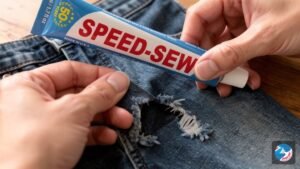
Fabric Glue (like Speed-Sew)
A good fabric adhesive creates a permanent, flexible bond by fusing the fabric fibres together. It’s applied as a liquid and dries to form a secure hold.
- Pros: The final bond is soft and flexible, so it moves with the fabric. This is crucial for lightweight trousers, as it prevents the stiff, board-like hem that tape can create. When applied correctly, the glue line is completely invisible from the outside.
- Cons: It requires curing time. You can’t just glue and go; most fabric glues need at least 24 hours to set properly before the garment is worn or washed. Applying too much can also lead to a mess or cause the glue to seep through the fabric.
Iron-On Hem Tape
This is a web-like adhesive that comes in a roll. You place it between two layers of fabric and use a hot iron to melt it, bonding the layers together.
- Pros: It’s incredibly fast. Once you iron and let it cool, the hem is ready to wear immediately. It’s great for creating a very crisp, sharp edge.
- Cons: The bond can be quite stiff. On a pair of flowing wool or synthetic trousers, this stiffness can be noticeable and look unnatural. The heat required can also be a problem for delicate fabrics like silk, rayon, or certain polyester blends, potentially causing scorching, melting, or a shiny mark. The adhesive can also degrade over time with repeated dry cleaning.
Step-by-Step Guide: The Fabric Glue Hem
For the neatest, most natural-looking hem on dress trousers, we recommend fabric glue. The flexibility of the bond is worth the wait for it to cure.
Step 1: Prepare Your Trousers
Always start with clean, dry trousers. Put them on, along with the shoes you plan to wear them with. This is the only way to get the length exactly right.

Step 2: Measure and Mark
Stand straight and have a friend help you. Fold the excess fabric up and under until the hem just grazes the top of your shoe. Secure the fold with pins. Check it in a mirror to ensure it looks right. Once pinned, carefully take the trousers off and lay them on a flat surface. Use a ruler to make sure the cuff is even all the way around, and mark the fold line with tailor’s chalk.
Step 3: Cut and Press the New Fold
Remove the pins. Most trousers will have a generous amount of fabric in the original hem. You’ll want to create a new hem that’s about 1 to 1.5 inches deep. Trim the excess fabric below this line, leaving enough to fold up. Now, turn the trousers inside out. Fold the cuff up along your chalk line and press it with an iron. Check the garment’s care label for the correct heat setting. This pre-pressing step is the secret to a sharp, professional-looking edge.
Step 4: Apply the Glue
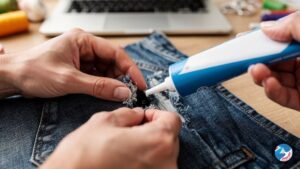
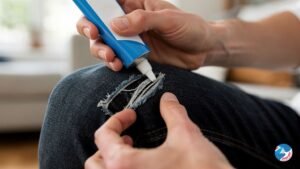
Working on the inside of the pressed cuff, apply a very thin, continuous bead of fabric glue. Position the glue about a quarter-inch away from the raw edge of the fabric you cut. Do not apply it right at the bottom fold, as it could squeeze out and become visible. A thin line is all you need; more is not better here.
Step 5: Press and Cure
Firmly press the glued hem into place. You can use fabric clips, clothespins, or simply lay the trousers flat under a stack of heavy books for about an hour to ensure a strong initial bond. If any glue squeezes out, wipe it away immediately with a damp cloth. Now, the most important part: patience. Let the trousers lie flat for at least 24 hours to allow the glue to cure completely before wearing.
When Not to Use Fabric Glue
While fantastic for hems, fabric glue isn’t a magic bullet for every repair. For safety and durability, stick to sewing for:
- High-stress seams like the crotch, shoulders, or backpack straps.
- Large holes or tears where fabric is missing.
- Expensive or delicate heirloom garments where an invisible, reversible repair is critical.
- Belt loops, pocket openings, and other areas that take a lot of direct pulling.
- Heavy-duty children’s play clothes that undergo extreme stress.
Fabric-Specific Considerations
Not all fabrics react the same way to no-sew methods. Here’s a quick guide:
| Fabric/Material | Best Method | Key Warning |
|---|---|---|
| Wool/Polyester Blends | Fabric Glue | Iron-on tape can create a stiff, visible line. |
| Stretch Fabric | Flexible Glue | Tape will not stretch with the fabric and may pucker. |
| Leather/Vinyl | Specialty Adhesive | Do not use an iron; the heat will destroy the material. |
| Delicate Synthetics (Silk, Rayon) | Test Glue First | Heat from an iron can easily melt or permanently mark the fabric. |
| High-Stress Seams | Sewing | Glue or tape will not provide sufficient strength for load-bearing areas. |
Caring for Your No-Sew Hem
To ensure your new hem lasts, follow these simple rules. This is especially important when it comes to washing or dry cleaning.
Care Instructions Checklist
- Always apply a thin, even layer of glue. Too much prevents a proper cure.
- Press the two surfaces together firmly for at least 30-60 seconds.
- Wipe away any excess glue with a damp cloth before it starts to dry.
- Allow a full 24-72 hours for the glue to cure before washing or significant stress.
- When washing, turn the trousers inside out and use a gentle cycle with cool water.
- When dry cleaning, it’s a good idea to point out the no-sew repair to your cleaner.
- Avoid high heat in the dryer; air drying is always safest for glued garments.
- If you’re ever unsure, test the glue on a scrap piece of the fabric you trimmed off.
Finally, always check the product label for specific safety guidance, especially if children are helping with the project. A well-executed no-sew hem can be just as durable as a sewn one, giving you perfectly fitted trousers without the hassle. If you have questions about your specific repair, the team at Speed-Sew is always here to help. Contact us for practical advice backed by decades of experience.
Can you use fabric glue to hem dress pants?
Yes, fabric glue is an excellent no-sew option for hemming dress pants, especially those made from lightweight wool, linen, or polyester blends. It creates a flexible, soft bond that moves with the fabric, resulting in a more natural drape than stiff iron-on tape.
Is fabric glue or iron-on tape better for hems?
For dress trousers, fabric glue is often the better choice for a neat, flexible finish. Iron-on tape is faster but can create a stiff line that looks unnatural on finer fabrics. For heavy cotton or denim, either method can work well, but glue provides superior flexibility.
How long does a no-sew hem last?
A properly applied no-sew hem using a quality fabric glue can last for years, surviving numerous washes and dry cleaning cycles. The key is to use a thin layer of glue, press firmly, and allow it to cure completely for 24-72 hours before wearing or washing.
Can you dry clean trousers with a glued hem?
Most high-quality fabric glues, like Speed-Sew, are formulated to be dry cleanable. However, it’s always a good practice to let your dry cleaner know about the no-sew repair. The bond from fabric glue is often more resistant to dry cleaning chemicals than some iron-on adhesives.
Last updated: 22 July 2026