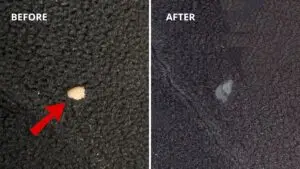
Fabric glue can fix a small hole or snag in a knit sweater by bonding loose fibres together on the inside, or by holding a small backing patch behind a slightly larger gap. It cannot rebuild missing knit stitches, stop a run that is still unravelling across the garment, or make a repair invisible on a fine, expensive sweater. For those jobs, darning or a tailor’s help is the better route. The tips below explain where glue earns its place and where it does not.
Why knits are different from woven fabric
A knit sweater is one long strand of yarn looped through itself. A hole in a knit is a break in that chain, which means the loops around it can keep letting go every time the sweater stretches. Woven fabrics like denim or cotton shirting fray at the edges but stay put. That difference matters for glue. On a woven tear, glue mainly needs to hold two edges together. On a knit, it also has to lock the broken loops so they stop travelling, and it has to do that without turning a soft, stretchy area into a stiff spot.
- Glue suits small holes and snags; darning suits missing yarn and active runs.
- Use a tiny amount of flexible, washable glue from the inside, with wax paper between layers.
- Cure 24 to 72 hours per the label, then wash gently inside out.
So the real question is less whether glue will stick and more whether the repaired area will still move like the rest of the sweater.
Quick tips for gluing a sweater hole
1. Use glue for small holes and snags, not big gaps
Glue suits smaller holes or snags where a sewn patch might look bulky, and it works by sticking the loose threads back together, according to this no-sew sweater repair guide. If you can see through a hole bigger than a fingertip, or yarn is clearly missing, glue alone has nothing to bond to.
2. Secure loose loops before anything else
Before you open the glue, turn the sweater inside out and gently ease any dangling loops back toward the hole with a blunt needle, crochet hook or toothpick. Do not pull hard. The goal is to bring the broken ends close together so the glue can capture them in one small area instead of chasing them across the knit.
3. Choose a glue that stays flexible and washable
A sweater stretches every time you pull it on, so the adhesive needs to stay flexible after it dries and hold up to washing. Read the label for wording about flexibility and machine washing. A glue that dries hard will crack on a knit, and it can leave a crunchy patch that feels worse than the hole did.
4. Apply a tiny amount from underneath
Put a very small amount of glue on the tip of a toothpick or cotton swab and work it underneath the edges of the hole from the inside of the garment. Knits are absorbent and open, so glue soaks in fast and can bleed through to the front. Less is better; you can add a second dab once the first has set.
5. Back a slightly larger hole with a small fabric patch
For a hole that is a little too wide to close with glue alone, glue a small piece of fabric behind it as a backing. Pick a thin, soft, stretchy fabric close to the sweater colour, such as a scrap of old knit T-shirt. Cut it with rounded corners so the edges are less likely to lift, and keep it only slightly larger than the hole so the area stays as flexible as possible.
6. Protect the front while it dries
Slide a piece of wax paper or parchment inside the sweater, between the front and back layers, so glue cannot seep through and fuse the two sides together. Lay the sweater flat, press the repair gently, and leave it undisturbed. Hanging it or stretching it while the glue is still wet can pull the loops apart again.
7. Test on a hidden spot first
Wool, acrylic, cashmere and blends react differently. Some glues darken fibres or leave a shine. Dab a little on an inside seam allowance or hem and let it dry before committing to a visible spot.
8. Know when to darn instead
Darning weaves new yarn across the gap, so it replaces what is missing and moves with the knit. If the hole is in a sweater you care about, sits in an elbow or cuff that bends constantly, or is part of an active run, a darn or a visit to a tailor will outlast a glued fix. Glue is a fast, reasonable choice for a casual sweater with a small snag; it is not a substitute for real knit repair on a favourite piece.
When not to use fabric glue
Glue has clear limits on clothing in general, and knits make some of them stricter:
- High-stress areas such as elbows, underarms, crotch seams and anywhere that takes load. Glue may not be sufficient.
- Large holes where fabric is missing. There is nothing for the glue to join.
- Expensive garments where an invisible repair matters. Glue can stiffen or discolour fibres; a professional reknit or darn is safer.
- Children’s rough-play clothing. Repeated pulling and frequent washing are hard on any glued repair.
- Very stretchy fabrics that need maximum flexibility, including stretch denim and fine ribbed knits.
- Seam junctions, pocket openings and belt loops, where several layers meet and take strain.
Fabric-specific warnings
| Fabric/material | Best method | Key warning |
|---|---|---|
| Wool and knit sweaters | Flexible glue for small snags; darning for larger holes | Too much glue leaves a stiff spot |
| Denim/cotton | Glue or sewing | Cure fully before washing |
| Stretch fabric | Flexible glue | Tape may feel stiff |
| Leather/vinyl | Specific adhesive | Iron-on tape can damage surface |
| Delicate synthetics | Test first | Heat from iron can melt or mark |
| High-stress seams | Sewing | Glue may not be sufficient |
Care checklist after the repair
- Apply a thin, even layer; too thick prevents a proper cure.
- Press firmly for 30 to 60 seconds.
- Remove any excess before it dries.
- Let the repair cure 24 to 72 hours before washing; follow the time on your glue’s label.
- Wash inside out on a gentle cycle, or hand wash if the sweater label says so.
- Avoid high heat in the dryer and check the garment label. Many sweaters are best dried flat anyway.
- Test on a scrap or hidden area first if you are unsure.
Check the product label for safety guidance, especially for children’s clothing or when children are helping with the craft. In Canada, consumer products fall under the Canada Consumer Product Safety Act, but a “non-toxic” statement on a glue label is the manufacturer’s declaration, not a Health Canada approval of that product.
A sensible next step
Look at the hole closely before you decide. If it is small, the knit around it is stable, and the sweater is an everyday piece, a careful glued fix from the inside is a quick, practical option. If yarn is missing, the hole keeps growing, or the sweater matters to you, set the glue aside and darn it or take it to someone who repairs knits.
This article is for general information only and does not constitute legal, technical, or professional advice. Always consult a qualified professional for guidance specific to your situation.
Can fabric glue stop a sweater from unravelling?
It can lock loose loops around a small hole or snag if you ease them together and glue them from the inside. It is not a reliable fix for an active run or a hole where yarn is missing; darning works better there.
How long should I wait before washing a glued sweater?
Let the repair cure 24 to 72 hours, following your glue’s label, then wash inside out on a gentle cycle or by hand and avoid high dryer heat.
What fabric should I use as a backing patch on a sweater?
A thin, soft, stretchy fabric close to the sweater colour, such as a scrap of knit T-shirt, cut with rounded corners and only slightly larger than the hole.
Last updated: 2 November 2026