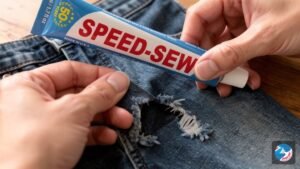
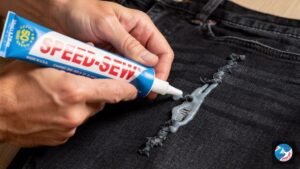
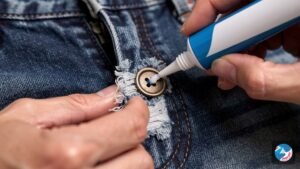
There’s nothing quite like the feeling of a perfectly worn-in pair of jeans, which makes the sound of a sudden rip all the more heartbreaking. Before you demote your favorite denim to the ‘gardening clothes’ pile, know this: you don’t need a sewing machine or expensive tailoring to fix it. A high-quality fabric glue can create a permanent, flexible, and washable repair that stands up to daily life, saving you the cost and hassle of a replacement.
This guide is your complete resource for fixing holes in jeans without sewing, specifically for DIYers in the US. We’ll walk through the step-by-step process, explain when glue is the best option (and when it isn’t), and show you how to choose the right materials for a repair that lasts. With a trusted product like Speed-Sew, which has been helping people with fabric repairs since 1970, you can confidently tackle rips, tears, and frays yourself.
Before applying glue, always pre-wash and dry both your jeans and the patch fabric separately. New fabric, especially denim, can shrink during its first wash. Skipping this step can cause the patch to pucker and pull away from the jeans after you wash the finished repair.
Why Fabric Glue is Your Secret Weapon for Jean Repair
For many common denim disasters, fabric glue isn’t just an alternative to sewing; it’s a better choice. The primary advantage is accessibility. Not everyone owns a sewing machine or has the time and skill to wield a needle and thread effectively. Fabric glue offers a no-skill-required solution that anyone can master in minutes. It’s faster, cleaner, and doesn’t require wrestling with thick denim layers under a sewing needle. This makes it ideal for quick fixes and for people who simply don’t sew.
A common misconception is that glue creates a stiff, uncomfortable patch. While this might be true for generic craft glues, a specialized fabric adhesive like Speed-Sew is formulated to bond with fabric fibers and remain flexible after curing. It moves with the fabric, so your repaired jeans won’t feel like they have a rigid plastic board attached to them. This flexibility is crucial for comfort, especially on areas like the knee or thigh. Furthermore, a quality fabric glue provides a durable, long-lasting bond that is designed for machine washing, ensuring your repair holds up over time. It’s a practical, modern solution for extending the life of your most-loved garments.
Step-by-Step Guide: How to Fix a Hole in Jeans Without Sewing
Ready to bring your jeans back from the brink? This process is simple, but following the steps carefully is key to a professional-looking, durable result. The most important part is patience during the curing phase.
What You’ll Need
- Your ripped jeans: Make sure they are clean and completely dry.
- A fabric patch: An old pair of jeans is the perfect donor. Choose a piece that closely matches the color and weight of the jeans you’re repairing.
- Speed-Sew Premium Fabric Glue: A reliable adhesive designed for clothing is .
- A small piece of cardboard: To place inside the jean leg to prevent glue from seeping through.
- Scissors: For trimming the patch and any frayed threads.
- A heavy book or weight: To apply pressure while the glue sets.
Step 1: Prepare Your Jeans and Patch
First, turn your jeans inside out. Trim away any long, loose threads around the hole to create a clean working area. Cut a patch from your donor fabric that is at least a half-inch (about 1.5 cm) larger than the hole on all sides. Rounding the corners of the patch can help prevent the edges from peeling up over time. Place the piece of cardboard inside the jean leg, directly behind the hole. This is a critical step that protects the other side of your jeans from getting glued shut.
Step 2: Apply the Fabric Glue
Apply a thin, even layer of Speed-Sew to the patch, paying special attention to the edges. You don’t need to saturate the fabric; a consistent bead around the perimeter and a light zigzag pattern in the middle is plenty. Applying too much glue can cause it to seep through the fabric and can actually prevent a strong bond from forming. The goal is 100% coverage with the thinnest possible layer. Place the glue-coated patch over the hole from the inside of the jeans. The ‘right’ side of the patch should be facing the hole, so it’s what you’d see if you looked through the hole from the outside.
Step 3: Press and Cure
Carefully turn the jeans right-side out. Smooth the fabric over the newly placed patch to ensure there are no wrinkles or bubbles. You can use your fingers to gently press the area around the hole, ensuring the denim makes good contact with the patch underneath. Now, place the heavy book or weight on top of the repaired area. Let it sit for at least 30-60 minutes to create a strong initial bond. The most important part comes next: curing. While the initial bond is fast, the glue needs 24 to 72 hours to fully cure and become water-resistant. Do not wash or wear the jeans during this time. This patience is what guarantees a long-lasting, washable repair.
When NOT to Use Fabric Glue on Jeans
Fabric glue is incredibly versatile, but it’s not a magic bullet for every type of damage. Knowing its limitations is key to a successful repair and preventing a fix that fails under pressure. For certain high-stress areas, sewing remains the superior method for structural integrity.
Think about the forces acting on the fabric. A patch on the thigh or a small snag on the shin experiences mostly surface friction. However, seams in the crotch, seat, or at the armholes of a jacket are under constant tension and stretching from your body’s movements. Fabric glue may not be sufficient to hold these load-bearing seams together permanently. The same logic applies to belt loops and the top corners of back pockets, which are frequently pulled and stressed. For these areas, reinforcing with strong thread is the only way to ensure a durable fix.
The size and nature of the damage also matter. Fabric glue is perfect for patching holes and tears where the fabric is still present. It’s not designed to fill large gaps where fabric is completely missing. In those cases, you’d need to sew in a substantial new piece of material. Similarly, for very expensive designer jeans or heirloom garments where an invisible repair is paramount, a skilled tailor who can re-weave the fabric is a better investment. Finally, for clothing worn during rough play, like a child’s pants, the combination of high activity and frequent, high-heat washing means a sewn patch will almost always be more reliable.
Fabric Repair Methods: A Quick Comparison
When you’re faced with a rip, it’s helpful to know your options. While we’re focusing on glue, iron-on patches are another popular no-sew method. Here’s how they stack up for different materials and situations.
| Fabric/Material | Best Method | Key Warning |
|---|---|---|
| Denim/Cotton | Fabric Glue or Sewing | A good glue bond is very strong, but you must let it cure fully for 24-72 hours before washing. |
| Stretch Fabric (e.g., stretch denim) | Flexible Fabric Glue or Sewing | Iron-on patches can restrict the fabric’s stretch and may feel stiff or peel away as the fabric moves. |
| Leather/Vinyl | Specific Leather/Vinyl Adhesive | Never use a standard iron-on patch. The heat from the iron can melt, warp, or permanently damage the surface. |
| Delicate Synthetics (e.g., rayon, polyester) | Test First / Sewing | Always test fabric glue on a hidden seam first. The heat required for iron-on patches can easily melt or leave a shiny mark on these fabrics. |
| High-Stress Seams (crotch, pockets) | Sewing Only | Glue and iron-on patches are not designed to withstand the constant tension and pulling that these seams endure. A sewn repair is essential for safety and durability. |
Finding the Best Fabric Glue in the US (2026)
The rise of DIY culture and online shopping in the United States has made it easier than ever to find craft supplies. When you search to buy online in the US, you’ll see several popular fabric adhesives. Dritz Liquid Stitch (~$5), Aleene’s Fabric Fusion (~$6-7), and the industrial-strength E6000 (~$6) are common choices. So, how do you choose?
While many glues work for general crafts, repairing clothing requires specific properties: flexibility and washability. This is where a specialized product shines. Speed-Sew, with prices ranging from $4 to $18 for different sizes and multi-packs available for $20-40 on Amazon, was formulated specifically for fabric and has been trusted since 1970. Its 50+ year heritage isn’t just a marketing point; it represents decades of proven performance on everything from denim jeans to upholstery. Unlike general-purpose glues that can dry hard and brittle, Speed-Sew is designed to create a bond that stays flexible, which is essential for the comfort of repaired clothing. Its wide availability at major US retailers like Walmart and on Amazon means you can easily get your hands on it for your next project.
The Critical Step: Post-Repair Care for Longevity
You’ve successfully patched your jeans! Now, how do you make sure that repair lasts? The first 72 hours are the most critical, but your long-term laundry habits also play a role. Following these care instructions will maximize the life of your no-sew repair.
- Allow a Full Cure: This is the most important rule. Do not wash or wear the jeans for at least 24 hours, and ideally for 72 hours. This allows the adhesive to fully cross-link and bond with the fabric fibers, achieving maximum strength and water resistance.
- Wash Inside-Out: When it’s time to wash, turn the jeans inside out. This minimizes friction and abrasion on the outside of the patch area, protecting the edges of the repair from the tumbling action of the washing machine.
- Use a Gentle Cycle: Wash on a cool or warm gentle cycle. Aggressive, heavy-duty cycles put unnecessary stress on all fabric seams, including your repaired one.
- Avoid High Heat in the Dryer: While Speed-Sew is designed to be durable, extremely high heat can soften adhesives. Tumble dry on a low or medium setting, or better yet, air dry your jeans. Always check the garment’s care label first.
- Test First (If Unsure): If you’re repairing a new type of fabric or using a new detergent, it never hurts to have tested your glue on a scrap piece of the same material and run it through a wash cycle to see how it behaves.
Taking these simple steps ensures your hard work pays off and your favorite jeans stay in your wardrobe rotation for years to come.
Safety First: Using Fabric Adhesives in Your Home
When working with any craft product, safety should be a consideration. In the United States, the Consumer Product Safety Commission (CPSC) sets broad safety standards for consumer goods. Many fabric glues, including Speed-Sew, are marketed as ‘non-toxic,’ which is a manufacturer’s declaration indicating the product is safe for its intended use when directions are followed. However, it’s always wise to work in a well-ventilated area.
Read the product label for specific safety guidance. This is especially important if you are repairing children’s clothing or if children are helping with a craft project. Keep adhesives out of reach of young children and pets. After application, wash your hands thoroughly. By following the manufacturer’s instructions and using common sense, you can ensure your DIY repair projects are both successful and safe for your household.
Your favorite jeans are more than just clothing; they’re full of memories. With the right technique and a reliable fabric glue like Speed-Sew, a rip doesn’t have to be the end of their story. You have the power to fix them yourself, no sewing required. Grab a tube and give your denim a new lease on life.
Are fabric glues like Speed-Sew safe for use on kids’ clothing in the US?
Yes, when used as directed. In the US, craft products are subject to standards overseen by the CPSC. Products labeled ‘non-toxic’ are considered safe for their intended purpose. For children’s clothing, ensure the glue is fully cured (24-72 hours) and dry before the child wears it, and always follow the specific safety instructions on the product label.
How much does it cost to fix jeans without sewing in the US?
The cost is minimal compared to professional tailoring. A tube of quality fabric glue like Speed-Sew costs between $4 and $18, and can be used for multiple repairs. When you use a patch from an old piece of clothing, the total cost for the project is just the price of the glue, making it a very economical solution for clothing repair in the US.
How long does a fabric glue repair on jeans really last?
A properly applied fabric glue repair can last for years, often for the remaining life of the garment. The key factors are using a high-quality, washable glue, applying a thin, even layer, and allowing it to cure completely for 24-72 hours before washing. Following gentle washing and drying instructions will also significantly extend the life of the repair.
When should I definitely sew my jeans instead of using glue?
You should always choose sewing for high-stress structural seams. This includes the crotch, seat, belt loops, and the corners of pockets. These areas are under constant tension from body movement, and only the structural strength of thread can provide a durable, safe repair. Fabric glue is best for patching holes and tears on flatter, lower-stress areas like the thigh or knee.
Last updated: 25 June 2026