You step out of the car and hear it—that faint, familiar scuff of your favourite jeans dragging just a little too long on the pavement. Or maybe you pull them from the dryer and notice the thick bottom hem is starting to look a bit fuzzy, with a few stubborn white threads sprouting from the edge. It’s the first sign of fraying, a problem that can quickly turn a great pair of jeans into a scruffy mess.
Before you consider retiring them or facing the hassle of a sewing machine, there’s a simple, durable fix you can do right at your kitchen table. Using a quality fabric glue, you can create a flexible, low-profile seal that helps stop early fraying and can hold up to washing when fully cured and used correctly.
For the cleanest finish, apply the fabric glue to the *inside* of the hem’s raw edge. This seals the fibres from view and prevents a visible, shiny line on the outside of your jeans after it dries.
Why Jean Hems Fray in the First Place
Understanding the cause helps with the cure. Fraying at the bottom of your jeans is almost always caused by one of two things: friction or wash-cycle wear.
Friction: This is the most common culprit. If your jeans are even a centimetre too long, the back of the hem will constantly drag and scrape against pavement, floors, and the back of your shoes. This constant abrasion physically wears away the cotton fibres, breaking them down until they unravel into a frayed edge. In Canada, this is especially common during winter months, when slush and road salt not only keep hems wet but also act as a coarse abrasive against pavement.
Wash-Cycle Wear: Denim is a tough fabric, but even it has its limits. During a wash cycle, especially a vigorous one, the thick, folded seam of a jean hem tumbles and rubs against other clothes and the inside of the machine. Over dozens of cycles, this agitation can weaken the fibres at the very edge, causing them to break and fray, even if the jeans are the perfect length.
Your Step-by-Step No-Sew Guide to Saving Your Hems
This method works best for stopping early fraying or sealing a freshly cut hem. All you need is a pair of sharp scissors, a good fabric adhesive like Speed-Sew, and a little patience.
For over 50 years, Speed-Sew has been a trusted fabric glue for durable fabric repairs. Its flexible, washable formula is suitable for fabric repairs, including denim hems, when applied sparingly and allowed to cure properly. This heritage of reliability makes it a trusted choice for preserving everything from work jeans to fashion denim.
You may find Speed-Sew through major Canadian craft and retail stores, online marketplaces, or directly from the brand website, depending on availability. A small tube often costs under $15 at many Canadian retailers, depending on store, size, and availability, making it an incredibly affordable way to save your favourite pair of jeans.
Step 1: Prepare Your Jeans
Start with clean, completely dry jeans. If they’re new, wash them once to remove any sizing chemicals. If they’re old favourites, make sure they’re freshly laundered and dried. Lay them flat on a clean surface, like a table or countertop, and smooth out the hem area you’ll be working on. If the hem is wrinkled, a quick pass with an iron will make the next steps much easier.

Step 2: Trim the Frayed Edge
This is the most critical step for a clean result. Using a pair of sharp fabric scissors (kitchen scissors will work in a pinch, but fabric scissors give a cleaner cut), carefully trim away all the loose, frayed threads. You want to create a crisp, straight edge. Don’t cut off the entire hem; just snip away the fuzzy, unravelled parts. The goal is to have a solid line of fabric to apply the glue to.
Step 3: Apply a Thin Bead of Fabric Glue
Always test fabric glue on a hidden area first, especially on dark, stretch, coated, light-coloured, or delicate denim. Apply sparingly to avoid seep-through or visible residue.
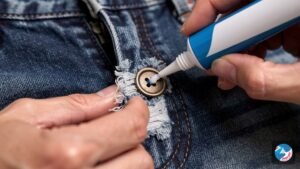
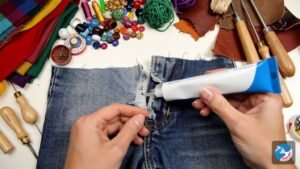
Uncap your fabric glue. The secret to a flexible, invisible repair is to use a very small amount. Gently squeeze the tube to apply a thin, continuous bead of glue directly onto the raw, trimmed edge of the hem. For extra precision, you can apply the glue to the *inside* edge of the hem—this keeps the repair completely hidden from the outside.
If you accidentally squeeze out too much, use a toothpick or the tip of a pin to spread it out and wipe away the excess before it starts to dry. You’re aiming to saturate the very edge fibres, not coat the surface of the denim.
Step 4: Press and Cure
Once the thin line of glue is applied, use your finger or a piece of cardboard to gently press the glued edge flat. This ensures the adhesive soaks into the fibres. Wipe away any final excess. Now, the most important part: let it cure. Lay the jeans flat in a spot where they won’t be disturbed for at least 24 to 72 hours. This curing time is essential for the glue to form a strong, permanent, and water-resistant bond. Rushing this step is the number one reason a no-sew repair fails.
When DIY with Fabric Glue Isn’t the Best Option
Fabric glue is a fantastic tool, but it’s not the right solution for every problem. Sewing is still the superior choice for repairs that are under high stress or require structural integrity. You should avoid using fabric glue for:
- High-stress seams: Areas like the crotch, armpits of a jacket, or where backpack straps connect need the strength of thread.
- Large holes: If fabric is missing, glue has nothing to bond to. You need a patch, which is best applied with a needle and thread.
- Expensive garments: For a high-end piece where an invisible repair is paramount, a professional tailor is your best bet.
- Heavy-duty wear: The knees of a child’s play pants or the seat of work trousers often require a stitched patch for durability.
- Maximum stretch: While many fabric glues are flexible, they can sometimes restrict the full movement of very stretchy denim or athletic wear.
- Structural points: Belt loops, pocket openings, and the junction of multiple seams need the reinforcement that only stitching can provide.
The table below gives a quick overview of which method to choose for different materials.
Fabric-Specific Warning Table
| Fabric/Material | Best Method | Key Warning |
|---|---|---|
| Denim/Cotton | Glue or Sewing | Cure fully before washing |
| Stretch Fabric | Flexible Glue | Glue line may feel stiff |
| Leather/Vinyl | Specific Adhesive | Iron-on tape can damage surface |
| Delicate Synthetics | Test First | Heat from iron can melt or mark |
| High-Stress Seams | Sewing | Glue may not be sufficient |
Caring for Your Repaired Jeans
Once fully cured, the repair can hold up better when jeans are washed inside-out on a gentle cycle with cold water and dried on low heat or air-dried. Always check the product label for safety guidance, especially for children’s clothing or when children are helping with the craft.
Prevention is the Best Medicine
To avoid fraying in the future, the best thing you can do is ensure your jeans are the correct length from the day you buy them. A tailor can hem them professionally, or you can create your own no-sew hem. Washing jeans inside-out and using lower heat settings in the dryer will also significantly extend the life of the fabric and prevent the fibres from breaking down prematurely.
With a steady hand and a tube of reliable fabric glue, you can easily rescue your favourite jeans from fraying. It’s a quick, effective repair that keeps your denim looking sharp. Visit speed-sew.com to find the right product for your repair or get expert advice from our Canadian team.
Frequently Asked Questions
Will the fabric glue make my jean hems stiff?
How long will a fabric glue repair last on jeans?
Can I use this method to stop fraying on my denim cut-off shorts?
Is fabric glue waterproof enough for the washing machine?
Last updated: 12 July 2026