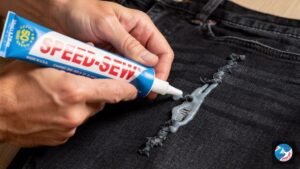
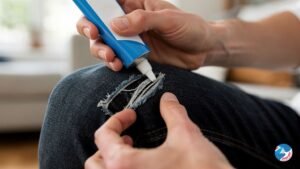
That favourite pair of jeans from a shop on Queen Street West finally giving out doesn’t have to be the end. For many Canadians, the cost of replacing quality clothing is a real concern, but the community and skills to repair them can feel just as out of reach. In a world of fast fashion, the simple act of mending has become a powerful statement of sustainability and personal style, yet knowing where to start can be daunting.
With more than 50 years of history in fabric repair, Speed-Sew has long been helping Canadians with quick fabric fixes. Now, we’re taking that a step further. We’re building a space for crafters to connect, share, and learn together, helping build a community around the skills of fabric care and creativity.
Health Canada’s CCPSA regulates consumer products, but a ‘non-toxic’ label on craft supplies is a manufacturer’s declaration, not a government endorsement of that specific product. Always check the label for safety instructions, especially when crafting with children.
- Proper application is key; a thin layer and full cure time (e.g., 24–72 hours) are essential for a lasting, washable bond.
- Fabric glue is best for low-stress repairs like hems and patches; sewing or professional repair is generally preferred for high-stress seams.
- A “non-toxic” label indicates suitability for intended use, not a specific government endorsement; always follow the product’s safety warnings.
- With a history of over 50 years, the Speed-Sew formula is focused on creating a flexible bond suitable for wearable garments.
More Than Just Glue: The Philosophy of No-Sew Repair
The rise of the DIY culture in Canada is rooted in practicality, creativity, and a growing desire for sustainability. A simple no-sew repair is a small act of defiance against a throwaway culture. Repairing a usable garment can extend its life and may reduce replacement costs and textile waste. Speed-Sew markets its formula for clothing and fabric, designed to create a flexible bond that moves with the garment.
Accessibility is key to this philosophy. A solution is only good if people can easily find it. That’s why our products are distributed across a range of Canadian retailers and online sellers. Availability varies by location and retailer, but Speed-Sew can be found at stores like Walmart, Home Hardware, Canadian Tire, and online sellers including Amazon.ca and Michaels. Pricing varies by tube size, pack quantity and retailer. Check current Canadian listings for up-to-date pricing. For suitable repairs, adhesive can be a relatively inexpensive way to extend the usable life of an item.
The real value, however, is in the performance. A good fabric repair shouldn’t feel like a stiff, awkward patch. The bond needs to withstand daily life, including the washing machine. Speed-Sew markets its formula as creating a durable connection that holds up through washing cycles, provided the glue has been applied and cured according to instructions. This commitment to a reliable, flexible, and washable bond has been the cornerstone of our brand’s history of more than 50 years. It’s the trust you need when you’re saving a beloved piece of clothing from the discard pile.
When to Use Fabric Glue (and When a Needle is Still Best)
Fabric glue is an incredibly versatile tool, but it’s not a magic wand for every fabric problem. Knowing its strengths and weaknesses is the key to a successful, long-lasting repair and avoiding a frustrating failure. Trust is built on honesty, and the truth is, sometimes traditional sewing is the superior option. Fabric glue excels at tasks where stress is low and a flat, bonded surface is the goal. Think quick hem adjustments on dress pants, attaching scout badges, or securing a small patch over a non-structural hole in a denim jacket.
It’s also perfect for stopping the edges of your new cut-off shorts from fraying or for last-minute costume repairs when you’re short on time. For decorative projects, like adding embellishments to a tote bag or creating fabric art, it’s an indispensable tool that offers precision without the pucker of stitches. The key is to match the tool to the task. For these applications, a good quality fabric glue provides a clean, fast, and durable solution.
However, it’s equally important to recognize when not to use fabric glue. For high-stress seams—like the crotch of trousers, the inseam of tight-fitting stretch jeans, or the point where a backpack strap meets the body of the bag—adhesive alone may not provide suitable structural strength. These areas endure constant pulling and stretching, and sewing may provide a more durable repair for high-load areas. Similarly, if you have a large hole where fabric is missing, a patch secured only with glue may be less suitable at the edges. For expensive or delicate garments where an invisible repair is paramount, a skilled tailor is your best bet. Finally, avoid using glue on items that require maximum flexibility and are subject to rough use, such as the knees of children’s play clothes, belt loops, or the corners of pocket openings. In these cases, sewing or a professional repair is generally preferred.

A Practical Guide: Getting the Best Results from Fabric Glue
The difference between a durable repair and one that comes apart in the first wash often comes down to technique. Applying fabric glue correctly is simple, but a few key steps are crucial for creating a strong, durable bond. Rushing the process is the most common mistake we see. Patience, especially during the curing phase, is your most important tool. Before you begin, it’s always wise to test the glue on a hidden area of the garment or a scrap piece of the same fabric to ensure it dries clear and doesn’t bleed through.
Once you’re ready to apply, follow this simple checklist for a professional-quality finish:
- Apply a thin, even layer: Less is more. A thick glob of glue will take too long to dry and can create a stiff spot. Apply a thin, consistent line or series of dots to one of the surfaces you’re bonding.
- Press firmly: Immediately join the two fabric pieces and press them together firmly for 30-60 seconds. This ensures the glue makes good contact with the fibres of both surfaces.
- Remove excess glue: If any glue squeezes out from the edges, wipe it away with a damp cloth before it starts to dry. Dried glue can be very difficult to remove.
- Cure completely: This is the most critical step. While the glue may feel dry to the touch relatively quickly, follow the current Speed-Sew product label for the required drying/cure time before washing. Recent Speed-Sew guidance recommends allowing approximately 24–72 hours before washing to achieve maximum bond strength and water resistance.
- Wash with care: Once cured, follow both the adhesive instructions and garment-care label. If compatible, consider turning the garment inside-out and washing on a gentle cycle with cool water.
- Avoid high heat: Follow Speed-Sew’s current drying instructions and the garment-care label. As general guidance for garment longevity, air drying or using a low heat setting may be preferable.
Different fabrics also react differently to adhesives and heat. Use this table as a quick reference guide:
| Fabric/Material | Best Method | Key Warning |
|---|---|---|
| Denim/Cotton | Fabric Glue or Sewing | Must be fully cured before washing to ensure a strong bond. Follow label instructions. |
| Stretch Fabric | Flexible Fabric Glue | The glued area may feel slightly stiffer than the surrounding fabric. Use sparingly. |
| Leather/Vinyl | Specific Leather Adhesive | Standard fabric glue may not bond well. Avoid using iron-on tape; the heat may melt or permanently mark the surface. |
| Delicate Synthetics (e.g., chiffon) | Test First / Hand Sewing | Glue can bleed through thin fabrics. Heat from an iron-on alternative may damage or melt the material. |
| High-Stress Seams | Sewing or professional repair generally preferred. | Adhesive alone may not provide suitable structural strength for areas under repeated tension. |
Navigating the Craft Aisle: Speed-Sew vs. The Competition
When you walk into a Canadian craft store like Michaels or browse online at Amazon.ca, the wall of adhesives can be overwhelming. Several brands compete for your attention, so how do you choose the right one? Let’s honestly compare Speed-Sew to other popular options like Dritz Liquid Stitch and Aleene’s Fabric Fusion. Each has its strengths, and the best choice depends on your project.
Competitors like Dritz Liquid Stitch and Aleene’s Fabric Fusion are well-known names in the craft world. They offer reliable bonds for a variety of fabric projects. Another common product you’ll see is E6000, but it’s important to know this is more of an industrial-strength adhesive, often used for attaching hard embellishments like rhinestones to fabric. It’s a different tool for a different job. The primary choice for general fabric mending often comes down to Speed-Sew, Dritz, and Aleene’s. These products are typically marketed as washable and permanent.
So, where does Speed-Sew stand out? First is our heritage. With a brand history of more than 50 years, we’ve had decades to refine our formula specifically for clothing. Our focus has always been on creating a flexible bond that moves with the fabric, which is essential for comfortable repairs on garments you actually wear. Second is our widespread availability in Canada, making us an easy and reliable choice for last-minute fixes. Finally, the brand is backed by a long-standing reputation for performance on everyday fabrics like denim and cotton. It’s this combination of specific formulation, trusted history, and easy access that has made it a long-standing choice for many Canadians.
Safety First: Understanding “Non-Toxic” Labels in Canada
When you’re working on projects for your family, especially for children’s clothing or crafts they’ll be involved in, safety is the top priority. You’ll see the term “non-toxic” on many craft supplies, including fabric glues. But what does that actually mean in a Canadian context? Consumer products sold in Canada are subject to the Canada Consumer Product Safety Act (CCPSA), which is administered by Health Canada. Manufacturers, importers and sellers are responsible for meeting applicable consumer-product safety requirements.
A ‘non-toxic’ product claim is not the same as individual Health Canada approval. Consumers should follow the current product label and safety instructions.
Always follow the current product label and keep adhesive away from eyes and unintended skin contact. Supervise children during craft projects and follow any age or ventilation instructions on the packaging. Reading the instructions and safety warnings carefully empowers you to use any product safely and correctly, ensuring your crafting experience is both creative and safe.
Ready to master the art of no-sew repair? For more tips, project ideas, and information on our products, you can explore our website or contact us. For any questions, please get in touch at hello@speed-sew.com.
Is Speed-Sew fabric glue approved by Health Canada?
In Canada, consumer products are regulated under the Canada Consumer Product Safety Act (CCPSA). However, Health Canada does not individually test and approve every craft product. The “non-toxic” claim on Speed-Sew products is a manufacturer’s declaration that the product complies with these safety regulations for its intended use. We always recommend reading the safety instructions on the label before use.
How much does fabric glue cost in Canada?
The price for fabric glue in Canada varies by brand and size. A single unit of Speed-Sew typically costs between CAD 6 and CAD 22 CAD. Competitors like Dritz Liquid Stitch are around CAD 7-9 CAD. For frequent crafters, Speed-Sew also offers bulk packs on Amazon.ca, which generally range from CAD 28 to CAD 55 CAD, offering a more economical option.
How does the Speed-Sew Local Guide Program work?
The Speed-Sew Local Guide Program is a community initiative to connect Canadian crafters. Participants get access to a network for sharing tips, opportunities to attend workshops, and expert advice. The goal is to build a community hub where members can learn from each other and become local resources for no-sew fabric repair and crafting in their own neighbourhoods.
Why should I join the Local Guide Program now?
Joining the Speed-Sew Local Guide Program now gives you early benefits as a founding member of the community. You’ll get first access to new products before they are available in stores, as well as exclusive invitations to community events and workshops as the program rolls out across Canada. It’s a great opportunity to connect with other crafters and be at the forefront of the no-sew movement.
- Canada Consumer Product Safety Act (CCPSA) — Official Government of Canada legislation governing the safety of consumer products.
Last updated: 7 September 2026